
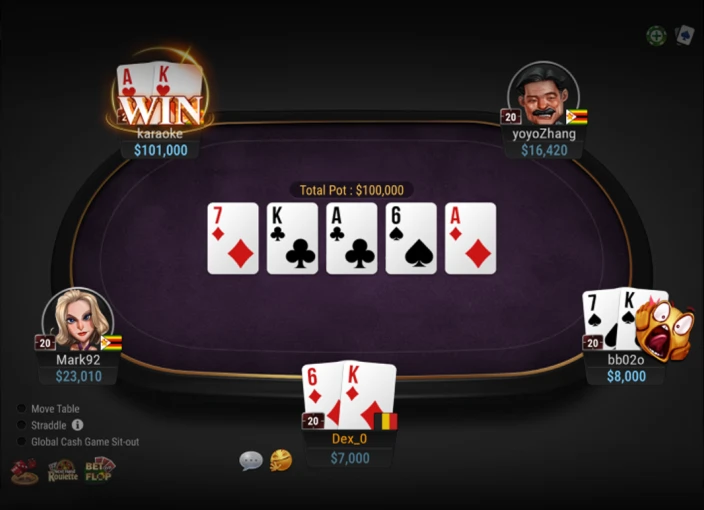
So you’ve spent years grinding Texas Hold’em. You know your ranges, you’ve memorized your preflop charts, and you can sniff out a bluff from a mile away. Then someone invites you to a short deck game — also called Six-Plus Hold’em — and suddenly it feels like you’ve stepped into a parallel poker universe. The rules look familiar, but the math? The math is a whole different beast.
Here’s the deal: short deck poker isn’t just Hold’em with a few cards missing. It’s a faster, more volatile, and honestly more brutal game if you don’t adjust your thinking. Let’s break down what changes, why it changes, and how you can make the transition without lighting your bankroll on fire.
What Exactly Is Short Deck Poker?
Short deck removes all cards from deuces through fives. That leaves you with a 36-card deck: sixes through aces. The game is typically played six-handed, and the action moves quickly. In most modern rules, a flush beats a full house — yes, you read that right — because with fewer cards, flushes become statistically easier to make than boats.
That single rule change flips hand rankings on their head. Suddenly, a flush isn’t the monster you once knew. It’s still strong, sure, but it’s no longer the near-nuts you’d expect in Hold’em.
The Math Shift That Changes Everything
In Hold’em, you’re dealt two cards from a 52-card deck. In short deck, you’re dealt from 36. That means every hand connects with the board more often. Pairing up happens roughly 30% more frequently than in regular Hold’em. Draws complete more often. And premium hands? They’re not as invincible as you think.
Let’s put it this way: in Hold’em, aces are kings. In short deck, aces are… well, still great, but they’re more like dukes. Everyone else has a fighting chance.
Quick Comparison: Hold’em vs. Short Deck
| Factor | Texas Hold’em | Short Deck |
|---|---|---|
| Deck Size | 52 cards | 36 cards |
| Flush vs. Full House | Full house wins | Flush wins |
| Preflop Hand Values | Clear tiers | Compressed, closer together |
| Draw Completion | ~35% by river | ~45%+ by river |
| Variance | High | Very high |
Preflop Adjustments: Forget Your Hold’em Charts
Your old preflop ranges? Toss them. In short deck, hands like J-T suited and 9-8 suited gain massive value because they flop straight draws and two-pair potential constantly. Meanwhile, hands like A-K offsuit lose some luster — they’re still good, but they don’t dominate the way they do in Hold’em.
Pocket pairs also drop in relative value. A pair of sixes? It’s basically a speculative hand now. Even aces can get cracked by a random 7-8 that flopped two pair or a straight draw that got there on the turn.
So what should you play? Here’s a rough starting point for a six-max game:
- Premium: A-A, K-K, Q-Q, A-K suited, A-Q suited
- Strong: J-J, T-T, A-J suited, K-Q suited, J-T suited
- Speculative but playable: 9-8 suited, 8-7 suited, 7-6 suited, small pairs
- Trash: Offsuit broadways with gaps (e.g., A-T offsuit), weak offsuit connectors
Notice how many suited connectors show up? That’s not a coincidence. In short deck, connectivity and suitedness matter more than raw high-card strength.
Postflop Play: Embrace the Chaos
Postflop in short deck is where Hold’em players really struggle. The instinct to slow-play big hands? Fight it. The urge to fold marginal hands to aggression? Resist it.
Because equities run so close, aggression wins pots. You can’t wait for the nuts. You have to bet, raise, and apply pressure. Semi-bluffing becomes your best friend. A gutshot that seemed thin in Hold’em is now a legitimate equity play.
The Flush Trap
Here’s a spot that trips up almost every Hold’em transplant: you flop a flush draw, turn the flush, and you’re ready to pile in. But wait — in short deck, flushes are weaker than full houses. So if the board pairs on the river, you’re not just losing to a bigger flush. You’re losing to every boat.
That doesn’t mean you should never play flushes aggressively. It means you need to be aware that your flush is more like a strong two-pair in Hold’em terms — good, but not invincible.
Position and Stack Depth Matter Even More
Short deck is often played with an ante instead of blinds, which means the pot starts bigger. That incentivizes more action. But it also means stack-to-pot ratios shrink faster. You’ll find yourself in all-in situations more often, whether you like it or not.
Positional awareness is still king. Being on the button lets you control pot size, steal more, and see cheap flops with speculative hands. But don’t get complacent — the players to your left are just as aware of the math as you are.
Common Leaks for Hold’em Players
Let’s be honest: most Hold’em players make the same mistakes when they first sit down at a short deck table. Here are the big ones:
- Overvaluing big offsuit hands: A-K offsuit is not the monster you remember.
- Underestimating suited connectors: They’re the new premium.
- Slow-playing too much: The board changes fast; bet your equity while you have it.
- Ignoring the flush/full house flip: This one costs people entire stacks.
- Playing too tight preflop: You’ll get blinded and anted out before you find a hand.
Final Thoughts: Adapt or Get Eaten Alive
Short deck poker is not a fad. It’s a legitimate variant that’s here to stay, especially in high-stakes circles and Asian poker rooms. For Hold’em players, it’s a chance to grow, to rethink what you know about hand values, and to embrace a game that rewards creativity and aggression over rote memorization.
But make no mistake — it will punish you if you cling to old habits. The math is different. The rhythms are different. And the players who thrive are the ones who adapt fastest.
So next time you sit down at a short deck table, leave your Hold’em ego at the door. Bring your curiosity instead. And maybe… just maybe… bring a little extra gamble.
